Essay 04 · Body & Practice
In human life, before anything can be understood, it moves in the body — and the body is where that shift begins.
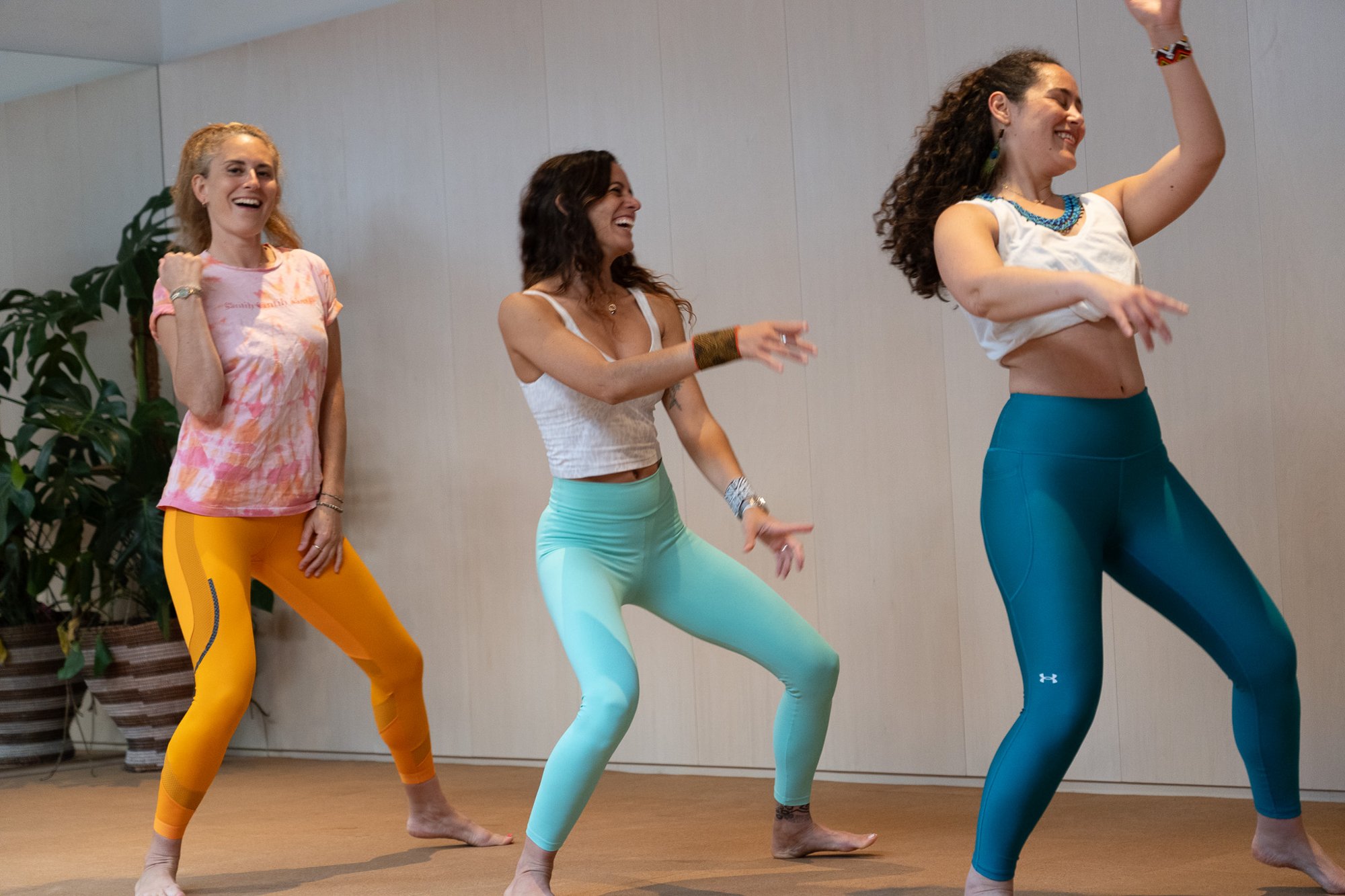
Every Friday for a summer — a period I will remember for a long time — I taught a dance class at Oca Studio designed to do one thing: to transmute, and to be seduced by life.

Not to relax. Not to stretch. To transmute. To reconnect. All of that was part of it, but the objective was to take the accumulated weight of a week — the meetings, the microaggressions, the decisions, the unfulfilled intentions, the small defeats that pile up without anyone noticing — and move it through the body so completely that it could no longer stay in its original form.
The class was somatic dance. Fast-paced. Choreography-based, Zumba style. A lot of squats and effort, a lot of sweat and laughs, very little talking. I was deliberate about that last part. This was not a space for processing out loud. Processing was done through the body — through the legs, the arms, the spine, the pelvis, the face — and posing: oh, how much we posed when the tune came to its end. The body knows things before the mind has language for them. I trusted that, and I asked the participants to trust it too.
This was not a space for processing out loud.
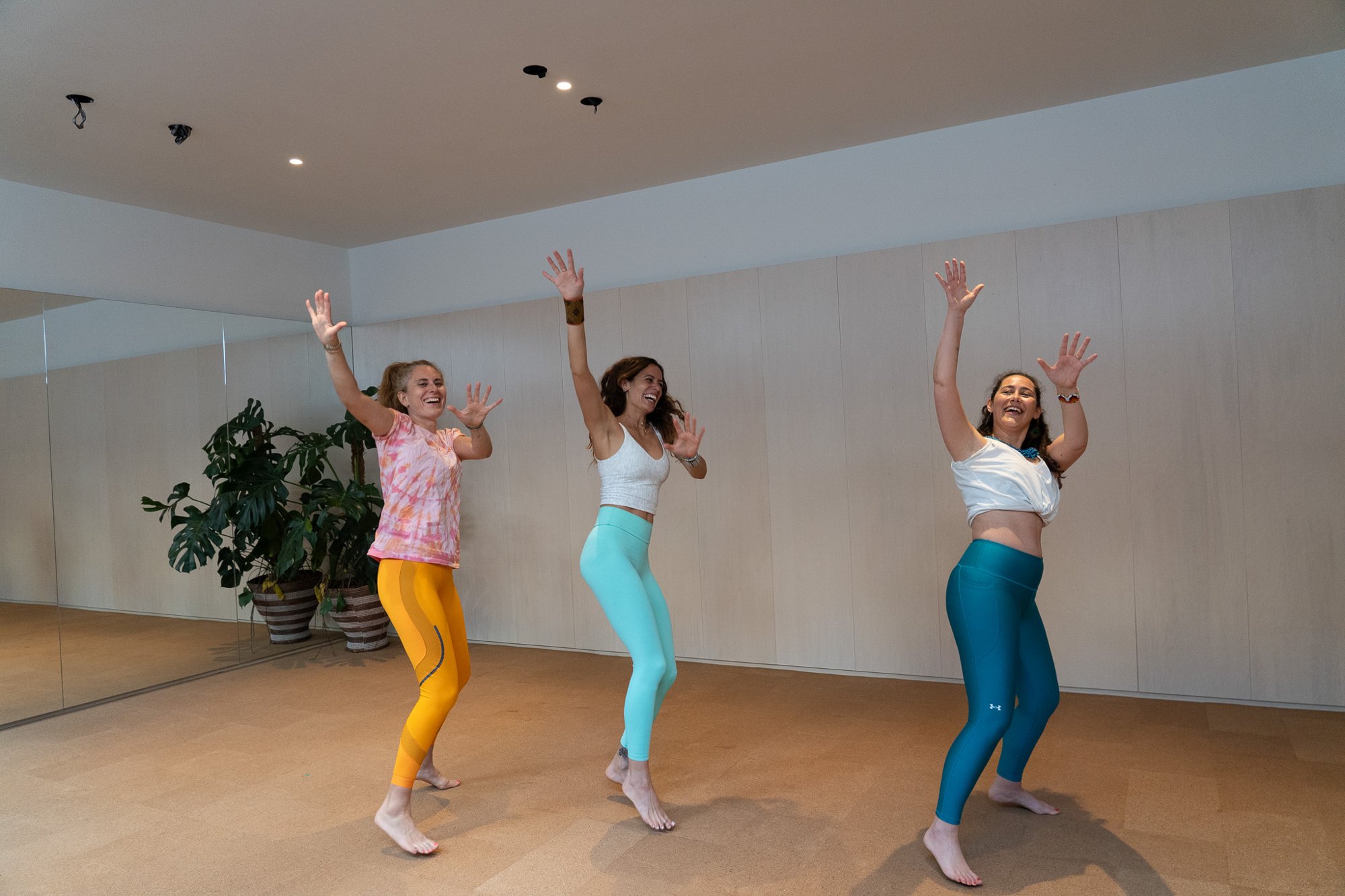
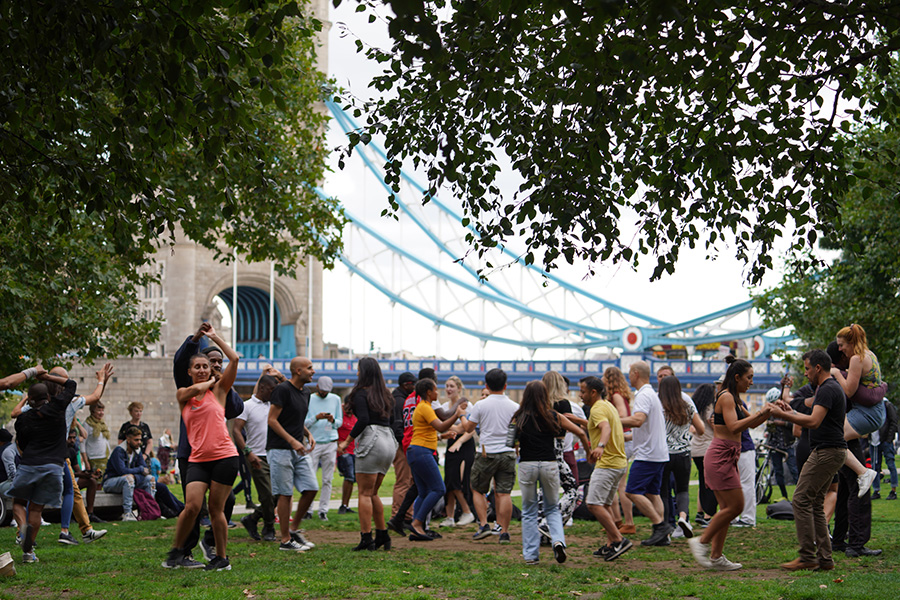
The sessions always started with the week still in the room. You could feel it — the tension in shoulders, the guardedness, the slight self-consciousness of people who have been performing professionalism for five days and are not yet sure they have permission to be otherwise. And then the music started, and the movement started, and somewhere in the middle of a sequence — often around twenty minutes in, when the body had warmed up enough that the ego had relaxed its grip — something shifted.
I watched it happen every week. The laughter that arrives not only because something is funny but because the body is releasing something it has been holding. The tears sometimes. The particular quality of tiredness after somatic work, which is completely different from the tiredness of overwork — one depletes, the other restores. And at the end, every time, without exception: people left smiling. Not because I asked them to. Because the body had done its work.
This is what I mean when I say transmutation. Not transformation — which implies becoming something different. Transmutation: taking what is there and changing its state. Dense into lighter. Held into released. Carried into offered.
Not transformation — which implies becoming something different.
“The most honest test of any designed experience: did it change the state of the person inside it? Not their opinion. Their state.”

The .Move classes at Oca Studio were, in retrospect, one of the most direct expressions of my work. Not the most visible, not the most documented, but perhaps the most true. Because they required no conceptual scaffolding. The result was in the room. You either finished the class lighter than you arrived, or you did not. The work was real-time and immediately verifiable.
I think about those Fridays often when I am working on projects that are more mediated — installations, written frameworks, producing research, conceptual architectures. They remind me that the body — physical, mental and spiritual as a whole — is always the reference point. That intelligence, in its fullest form, lives not just in the mind but in the gesture, the rhythm, the willingness to be moved.
Everything I am building now — Alive Sculptures, Intertwine, Ambisonic Xiré and others — carries that Friday energy somewhere inside it. The belief that experience, when it is real, changes the state of a person. Not their opinion. Their state.
You either left the class lighter than you arrived, or you did not; it will be clear.

“The body knows things before the mind has language for them. I trusted that. The participants learned to trust it too.”

On human–technology co-evolution and the ethics of the in-between
Read the essay →
Before immersive systems become technologies, they are conditions — spaces where perception reorganises itself.
Read the essay →
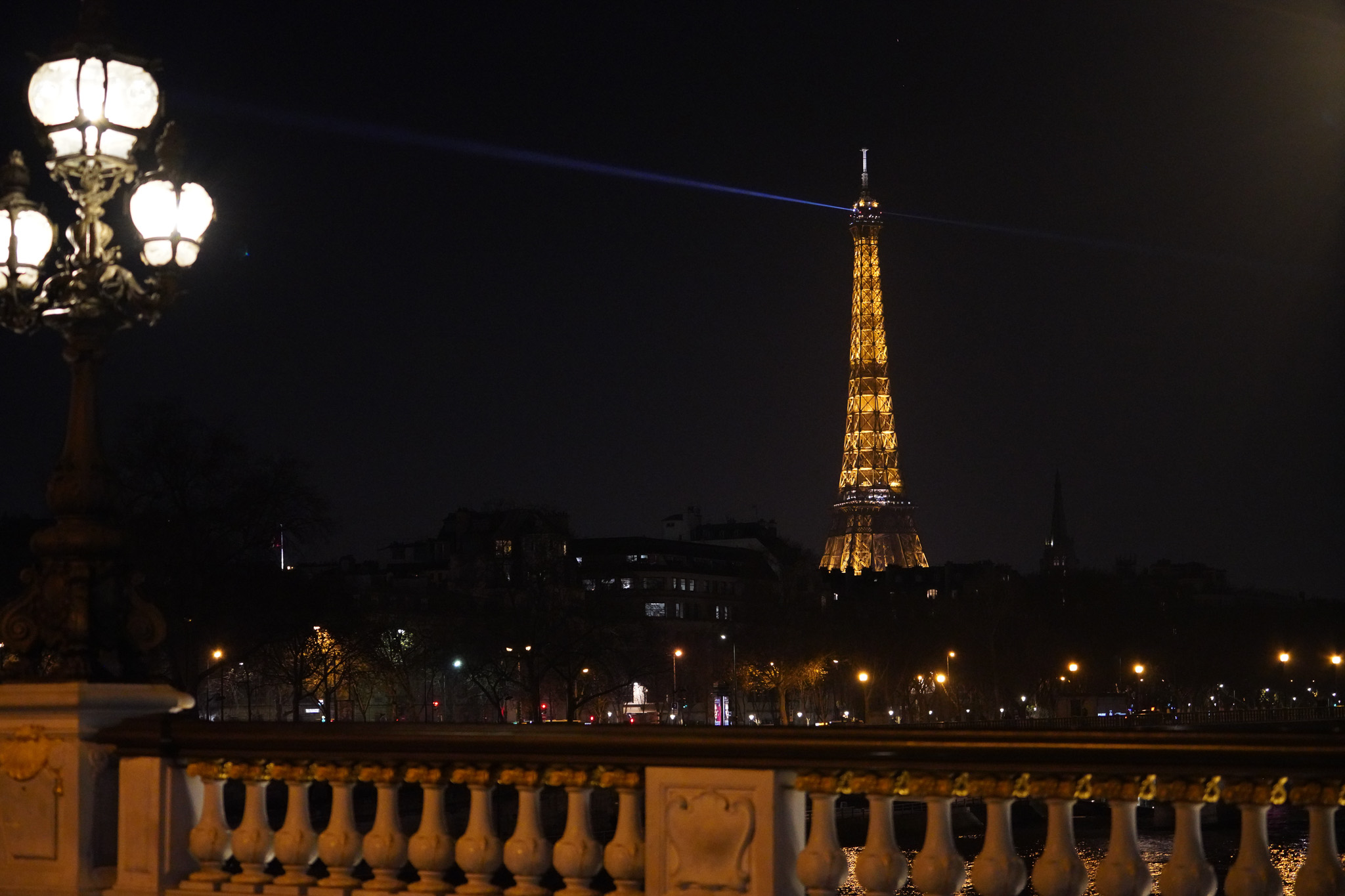
Paris does not ask to be understood quickly — it teaches you how to see by slowing you down.
Read the essay →
Some places do not impress — they recalibrate how you meet others, and Morocco does this with precision.
Read the essay →
Some ideas do not arrive through force — but through environments that understand depth and time. Champagne is one of them.
Read the essay →