Essay 06 — Sound & Space

Spatial Sound as Protocol: Distributed Authorship in Space

Before immersive systems become technologies, they are conditions — spaces where perception reorganises itself.

Grazzielle Lefranc grazzie.house London

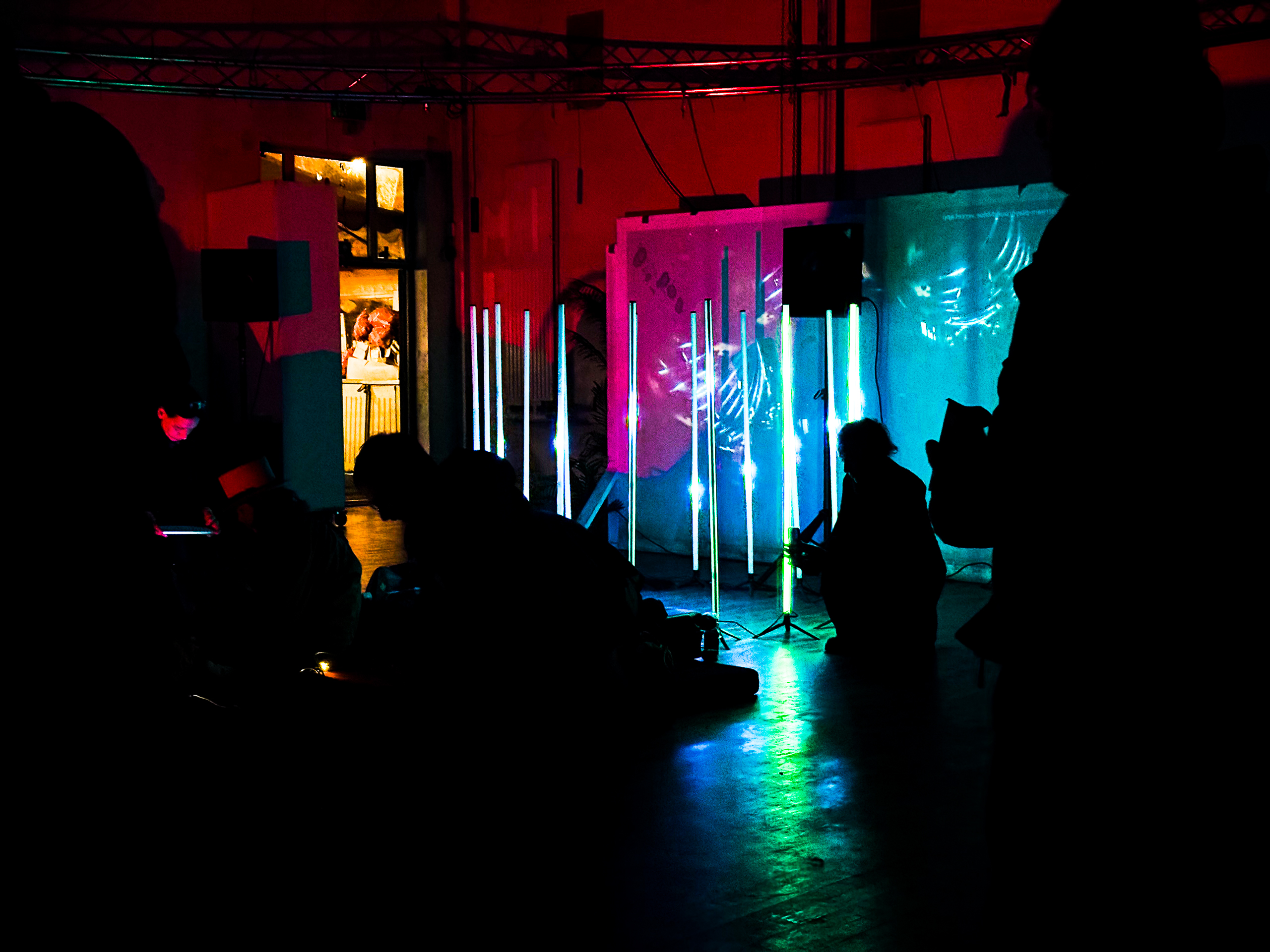
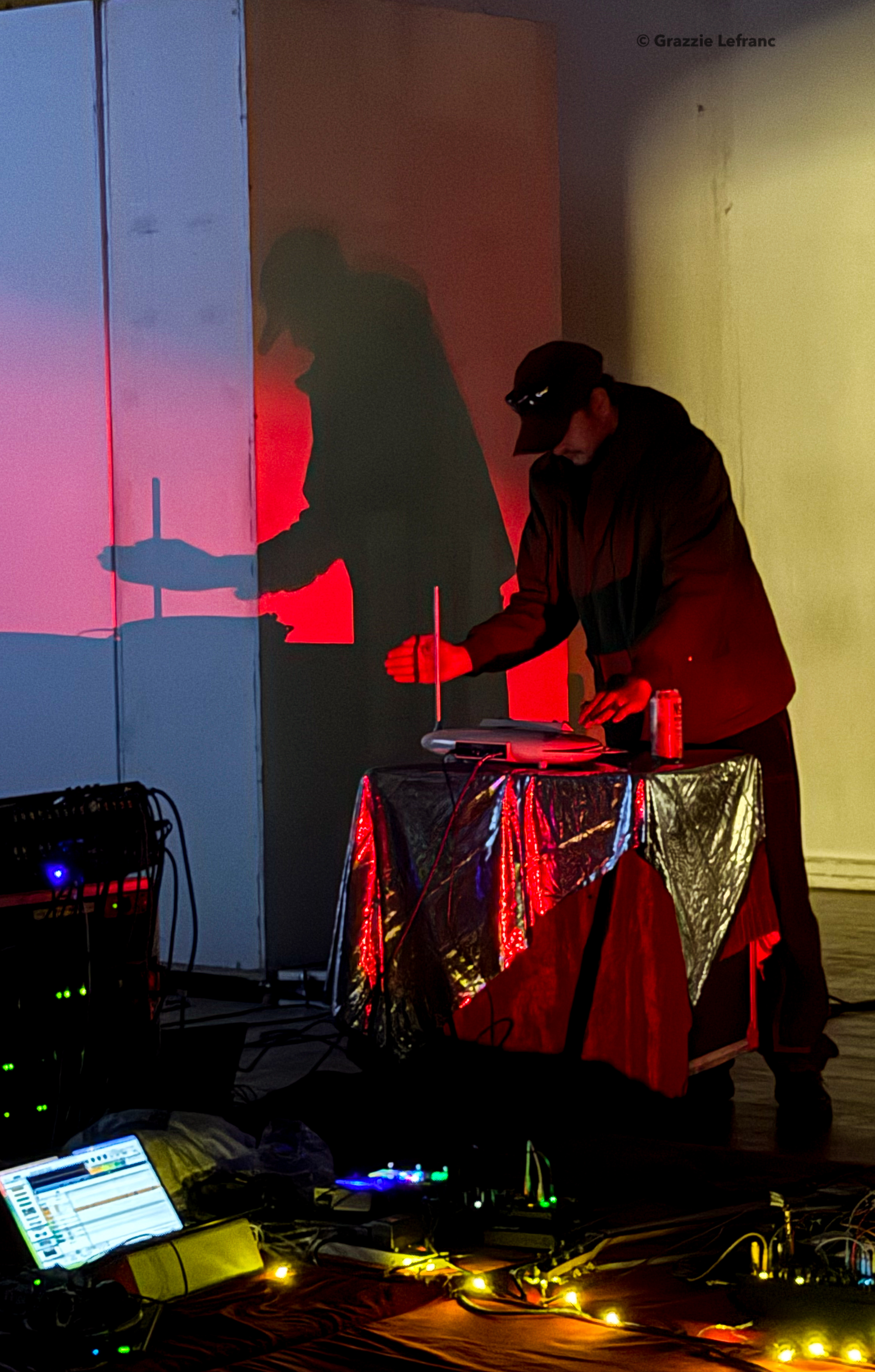
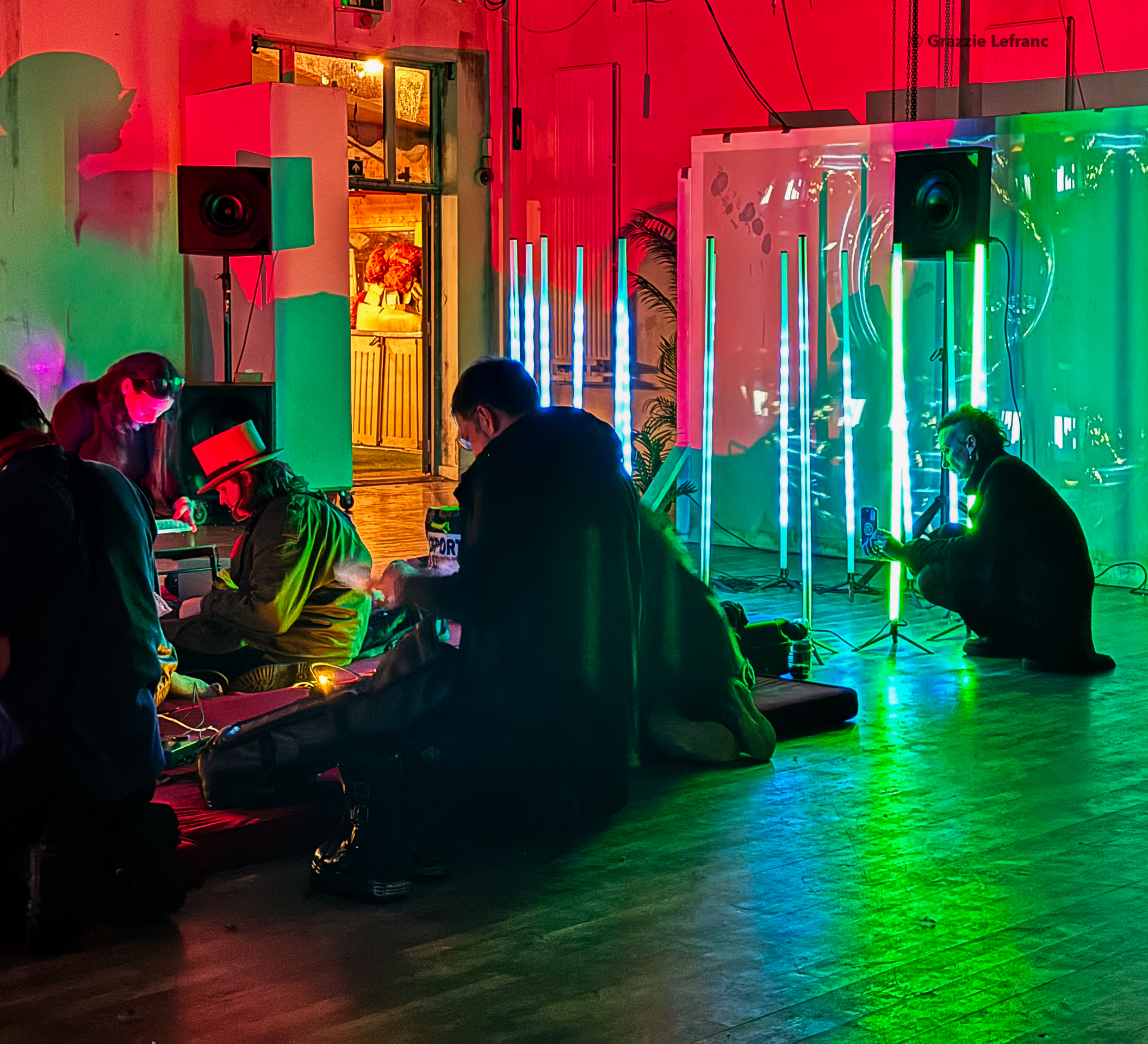
On a Sunday afternoon in East London, I stepped into a room where cables became veins, light became architecture, and sound reorganised the body.

Game Guidelines for Workshops was not just an experimental sound session. It was a live study in distributed authorship — a carefully orchestrated exploration of how immersive environments can decentralise perception, reorganise attention, and create shared cognitive space. I was invited to participate and document, moving between both roles throughout the afternoon.

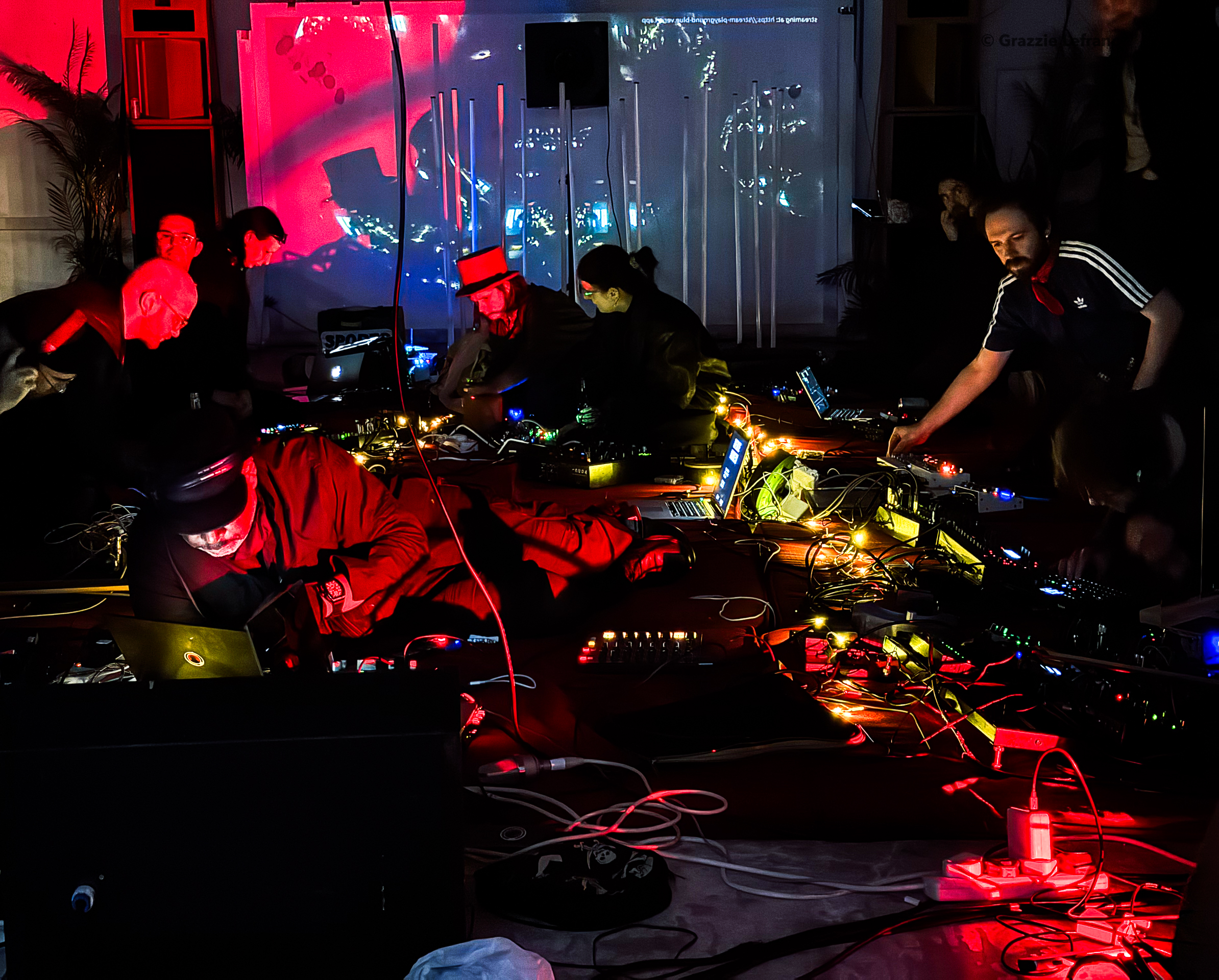
People gathered on the floor — not as audience, but as field-builders. Modular systems, constraint-based play, feedback loops, red light, proximity. No spectacle. Just attention. And that is what interests me most.
Ambisonics: spherical cognition

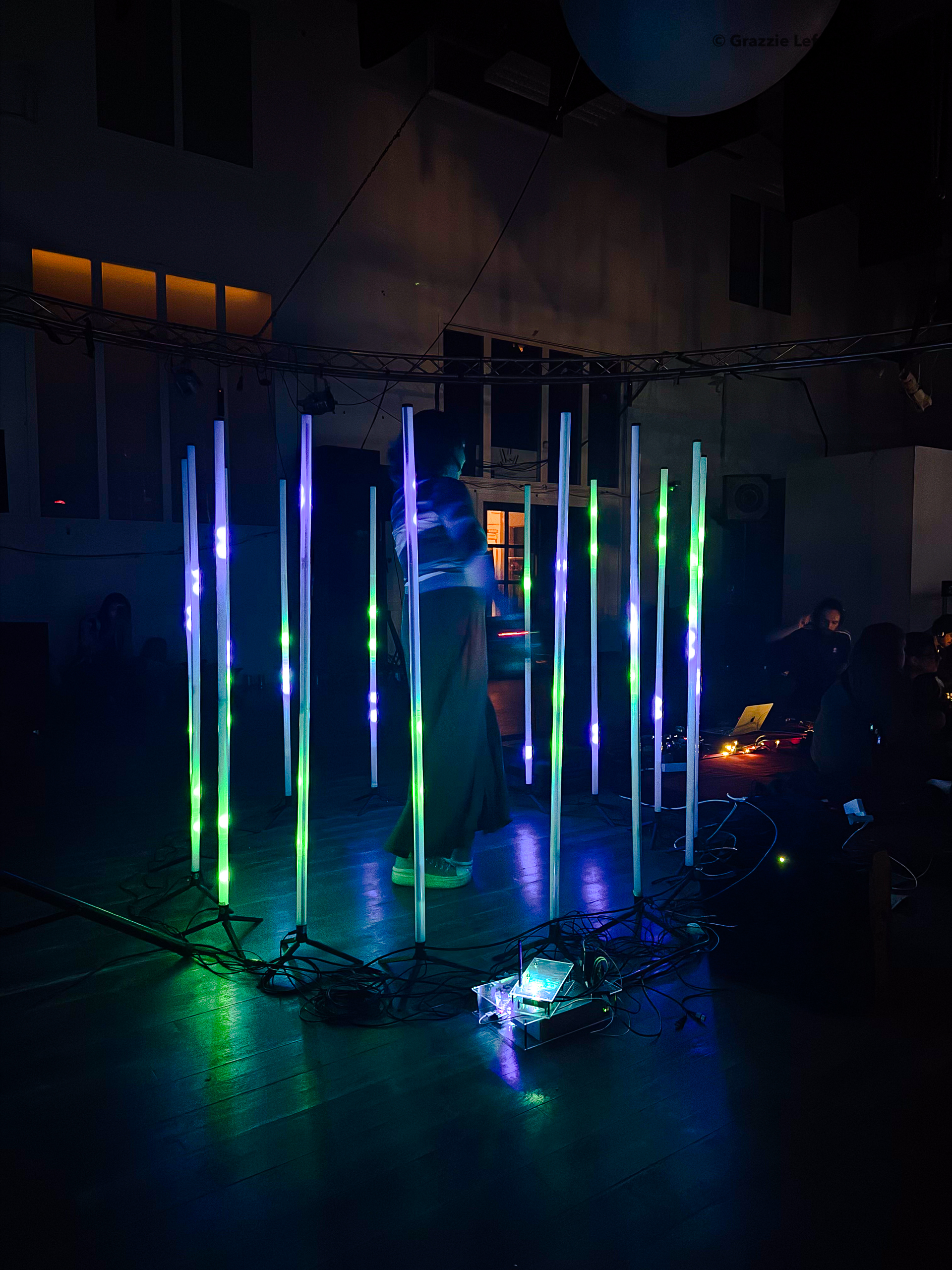
Ambisonic spatial sound is not simply surround sound. It encodes the world in three dimensions using spherical harmonics — preserving direction, elevation, and depth simultaneously. But beyond the mathematics, it does something more fundamental: it decentralises the listener.

Instead of a "sweet spot" (like stereo), ambisonics creates a zone of immersion. Every position in the space is valid. Movement matters. Orientation matters. Proximity changes what you hear. This has profound implications for how groups organise attention. In traditional performances, the audience faces the stage. In ambisonic spaces, there is no single focal point. Participants must navigate, choose, listen — become active agents rather than passive receivers.

Ambisonic field — East London
FIELD STUDY — EAST LONDON, 2025
Modular spatial system
MODULAR SYSTEM
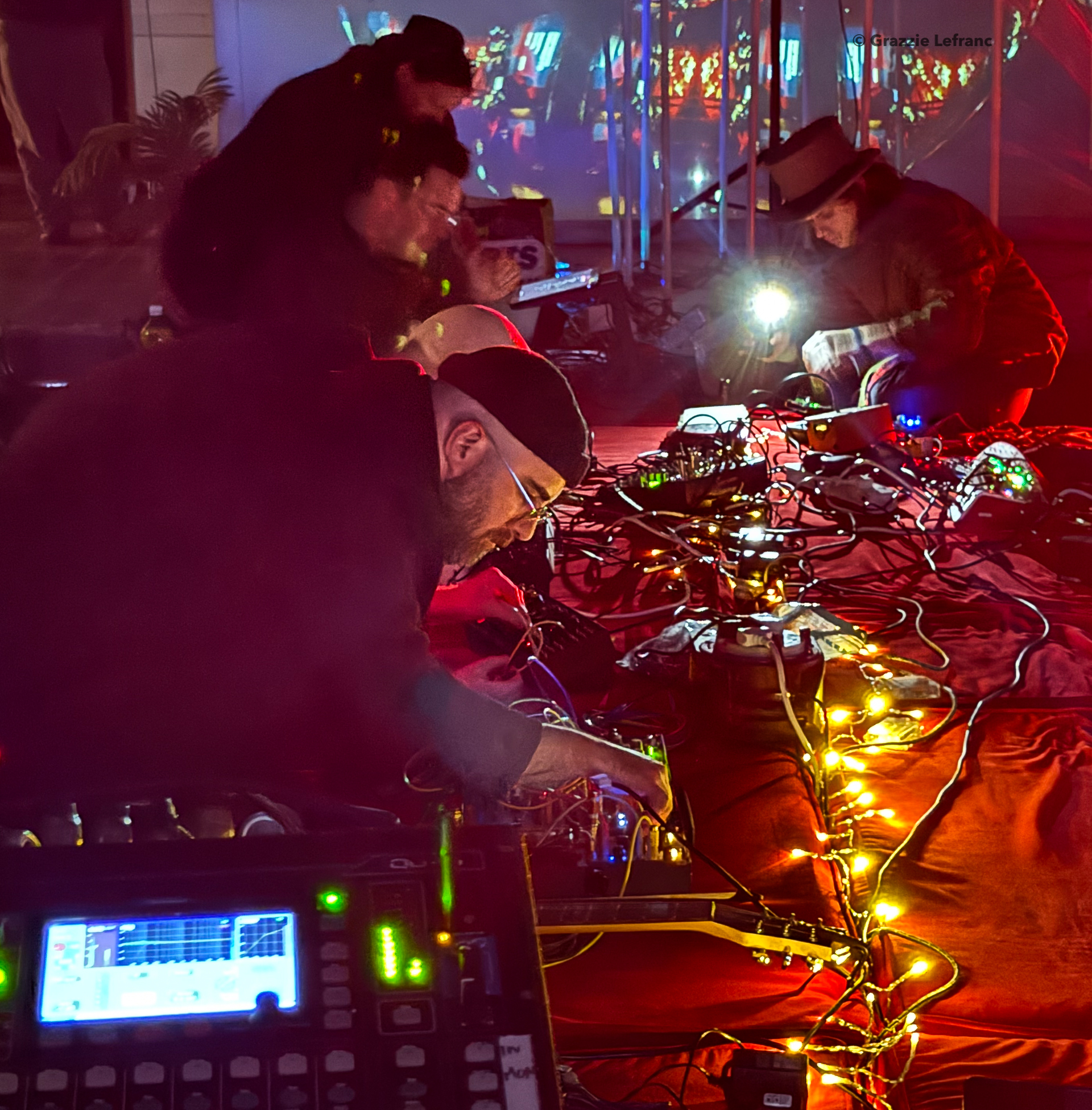
Constraint-based play
CONSTRAINT-BASED PLAY

"In ambisonic space, where you stand changes what you hear. The body becomes part of the composition."

Distributed authorship

What made this event distinctive was the principle of distributed authorship. The performance was not created by a single artist directing passive receivers. Instead, authorship was spread across multiple agents: the sound designers encoding spatial information, the performers following constraints and responding to real-time conditions, the light technicians creating volumetric spaces, and the participants — their presence, movement, and listening choices shaping the acoustic and visual environment.

This mirrors principles found in distributed systems and emergent complexity. No single node controls the outcome. The whole is richer than any individual contribution.

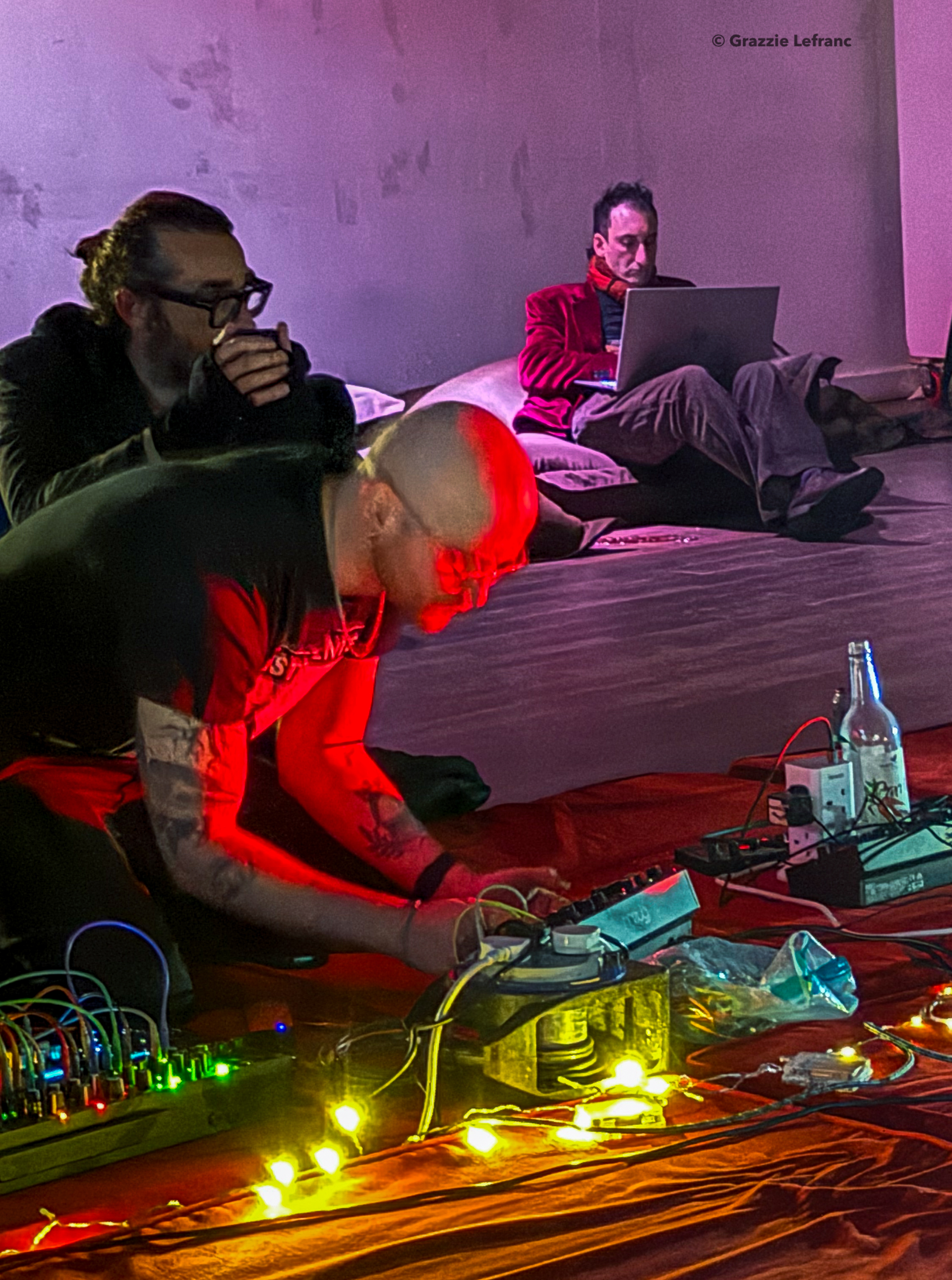
Distributed authorship — held field
HELD FIELD — DISTRIBUTED AUTHORSHIP
Volumetric light
VOLUMETRIC LIGHT
Listener as agent
LISTENER AS AGENT

Why this matters now

The future of immersive systems will not belong solely to engineers or coders. It will belong to those who understand ritual as interface, rules as generative architecture, sound as spatial ethics, and presence as protocol.

What I witnessed that Sunday confirms something I have been building toward across multiple projects — Ambisonic Xiré, Intertwine, Alive Sculptures. Immersive environments are not about escape. They are about re-organising attention in shared space. About collective perception. About what happens when technology stops being the protagonist and starts being the held field.

This is the territory where culture, research, spirituality, and technology begin to converge. And I am not watching it from the outside. The conversation has only just begun. And the room is still open.

"Ritual as interface. Rules as generative architecture. Sound as spatial ethics. Presence as protocol."

Ambisonic field — closing
THE ROOM IS STILL OPEN
Presence as protocol
PRESENCE AS PROTOCOL
In their own words — shareable extracts

"Before immersive systems become technologies, they are conditions — spaces where perception reorganises itself."

"In ambisonic space, where you stand changes what you hear. The body becomes part of the composition."

"Ritual as interface. Rules as generative architecture. Sound as spatial ethics. Presence as protocol."

"Immersive environments are not about escape. They are about re-organising attention in shared space. That is the territory I am building in."

← All essays Visit Grazzie.House →