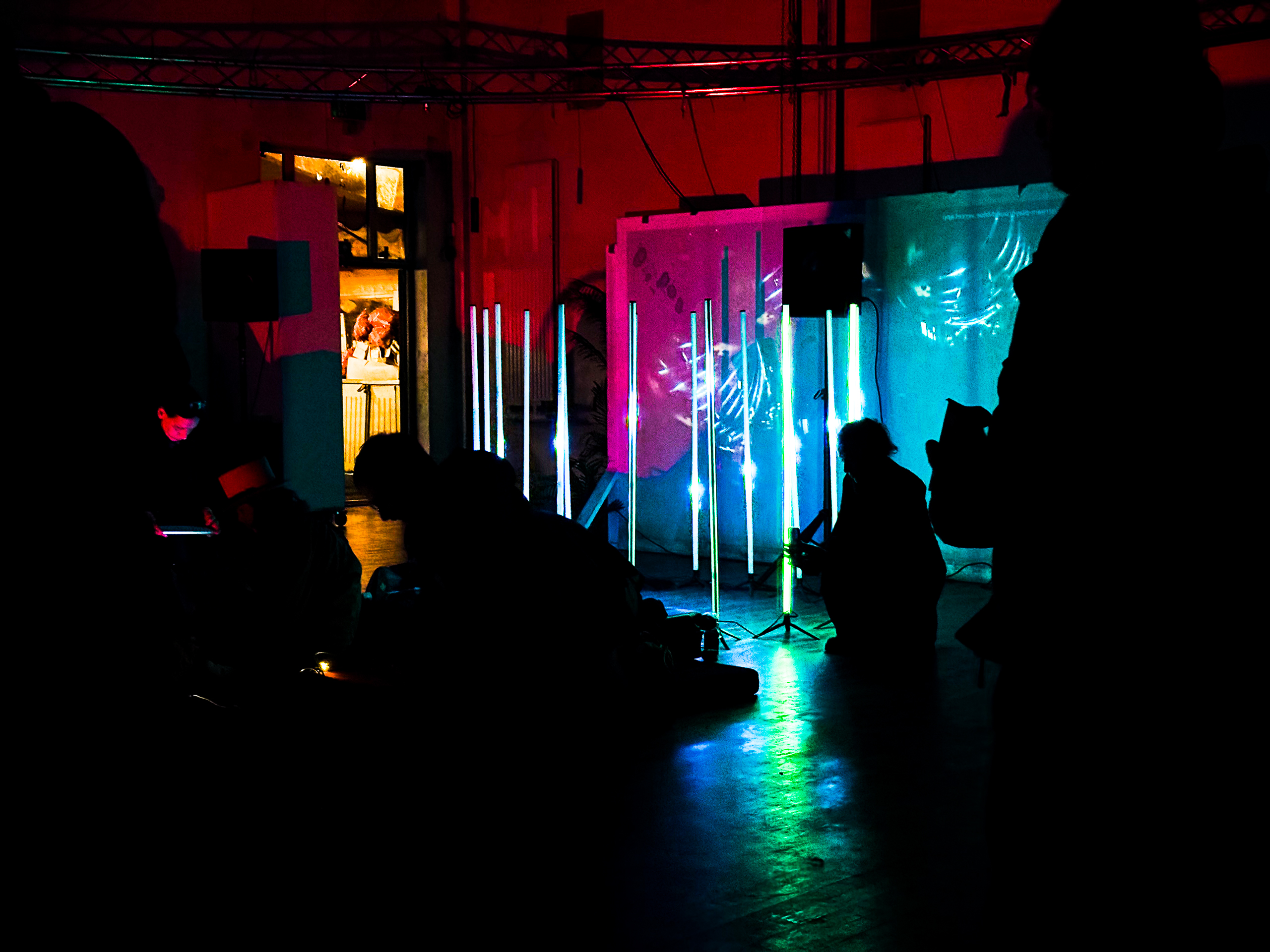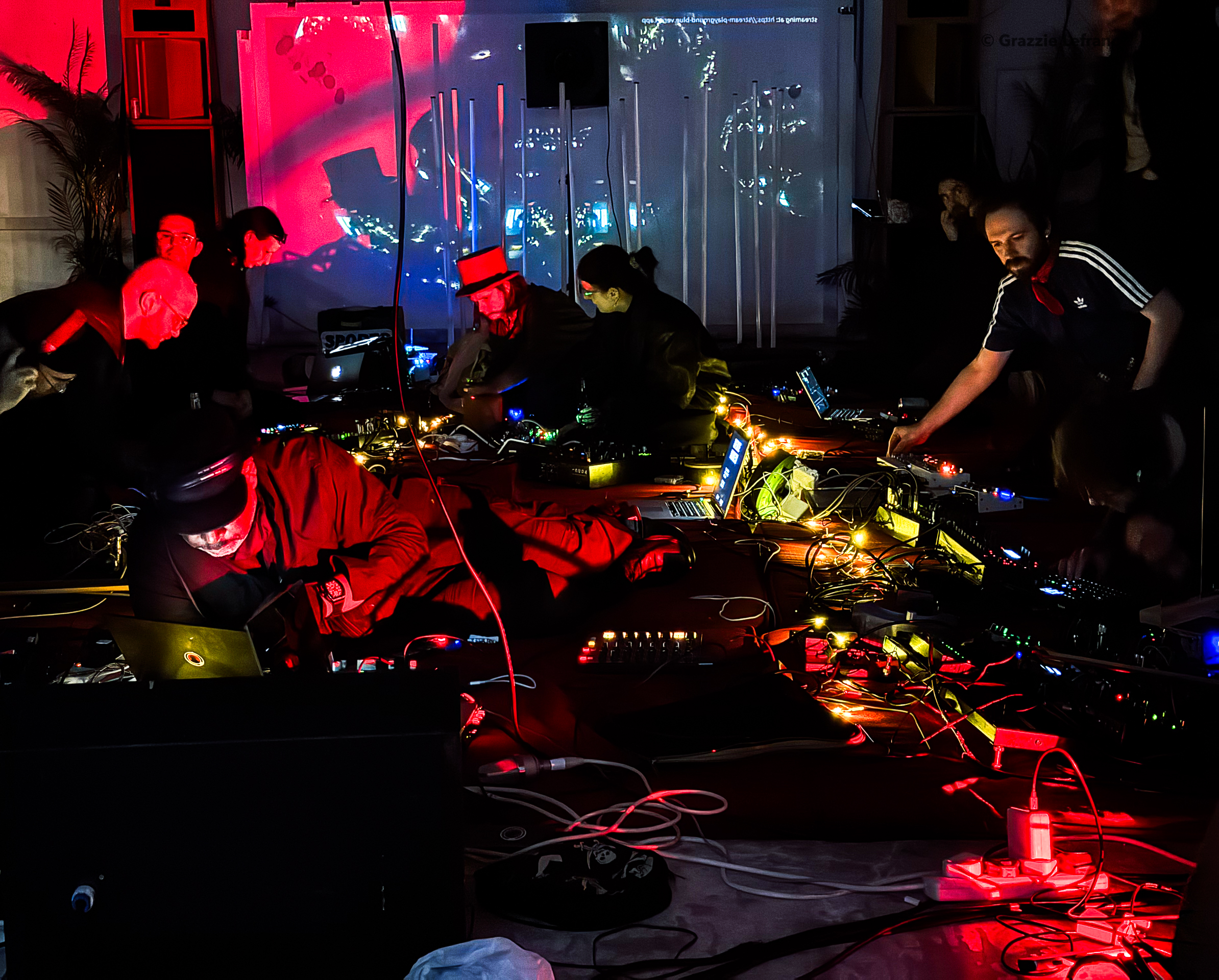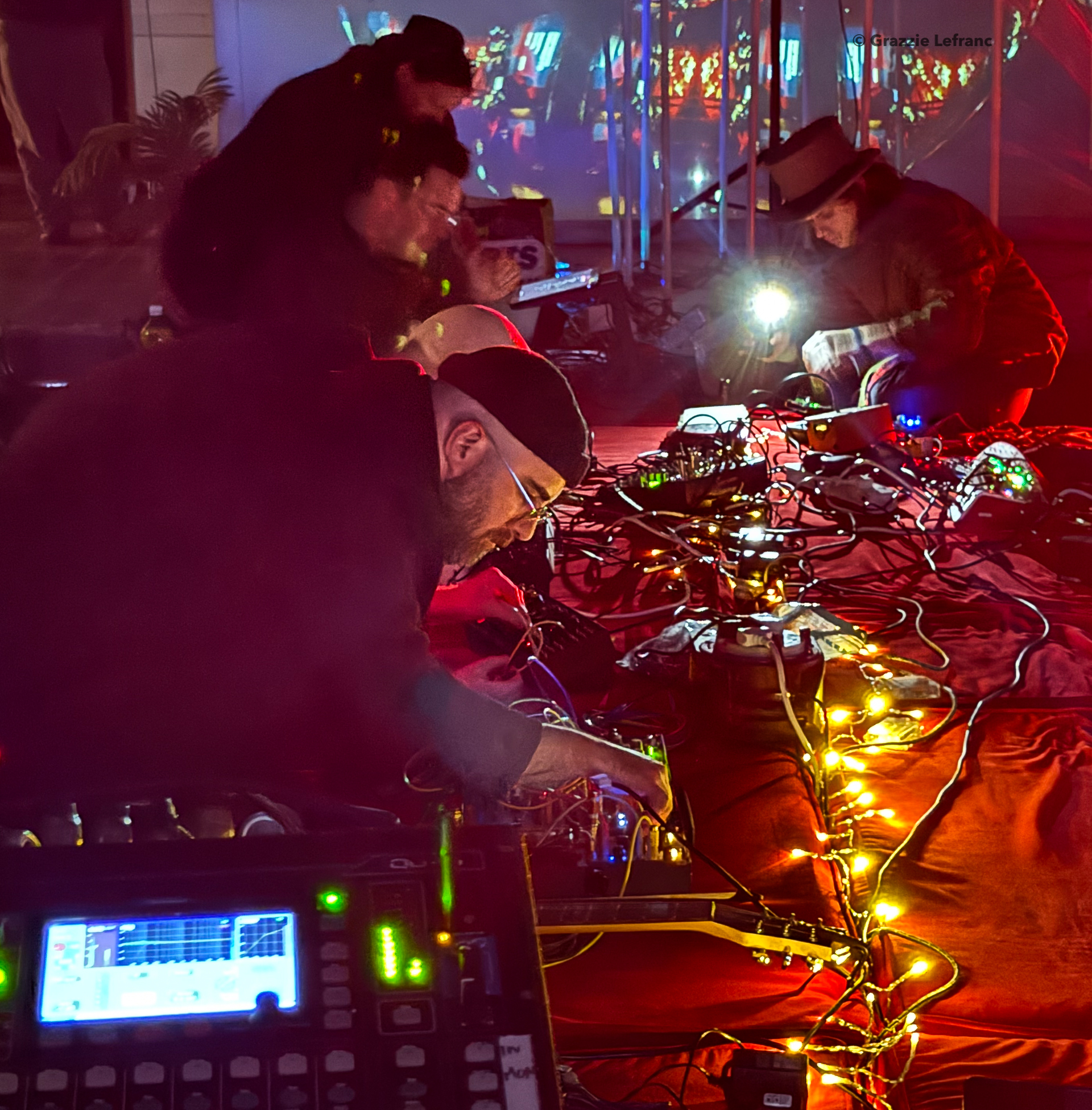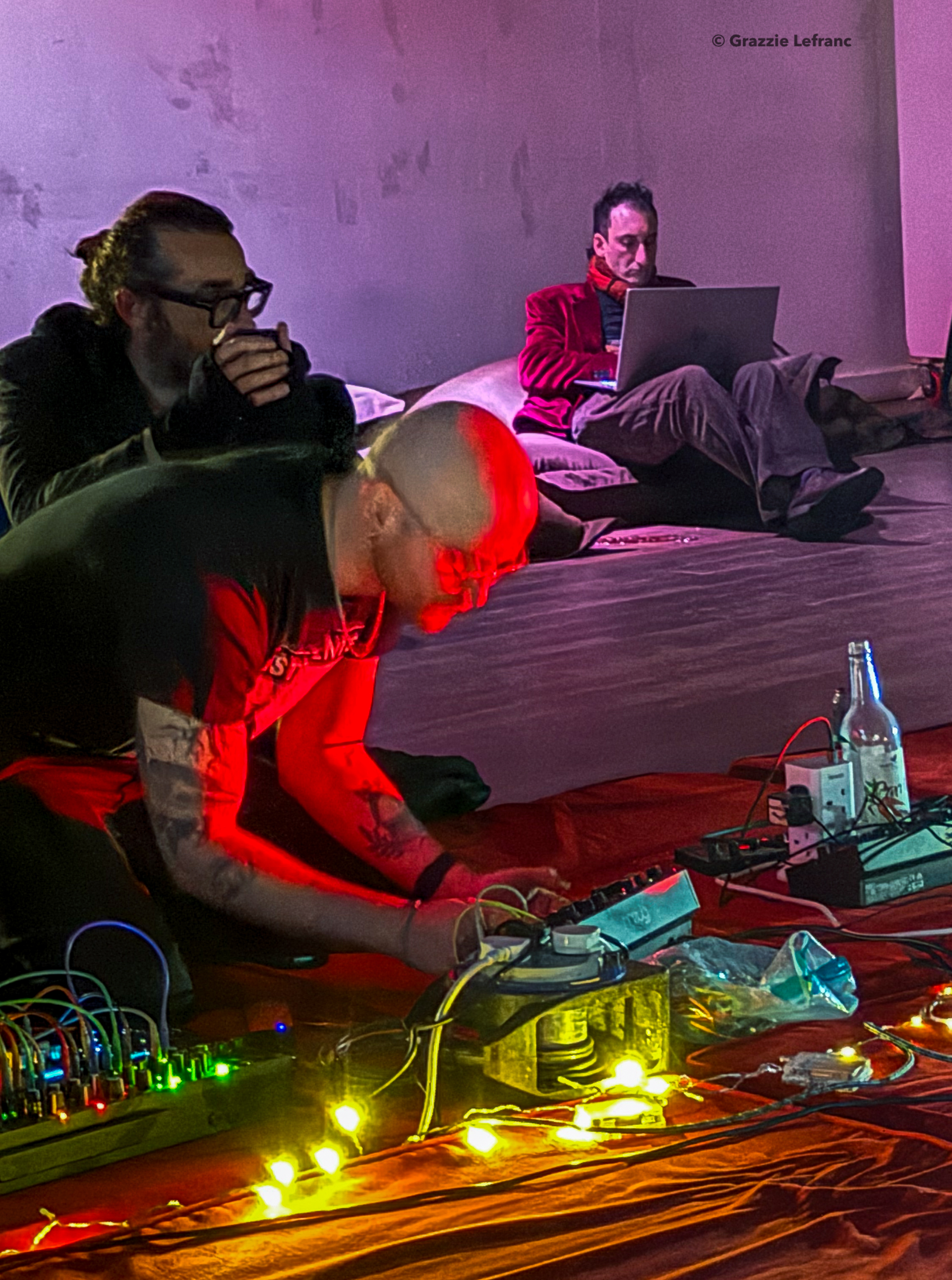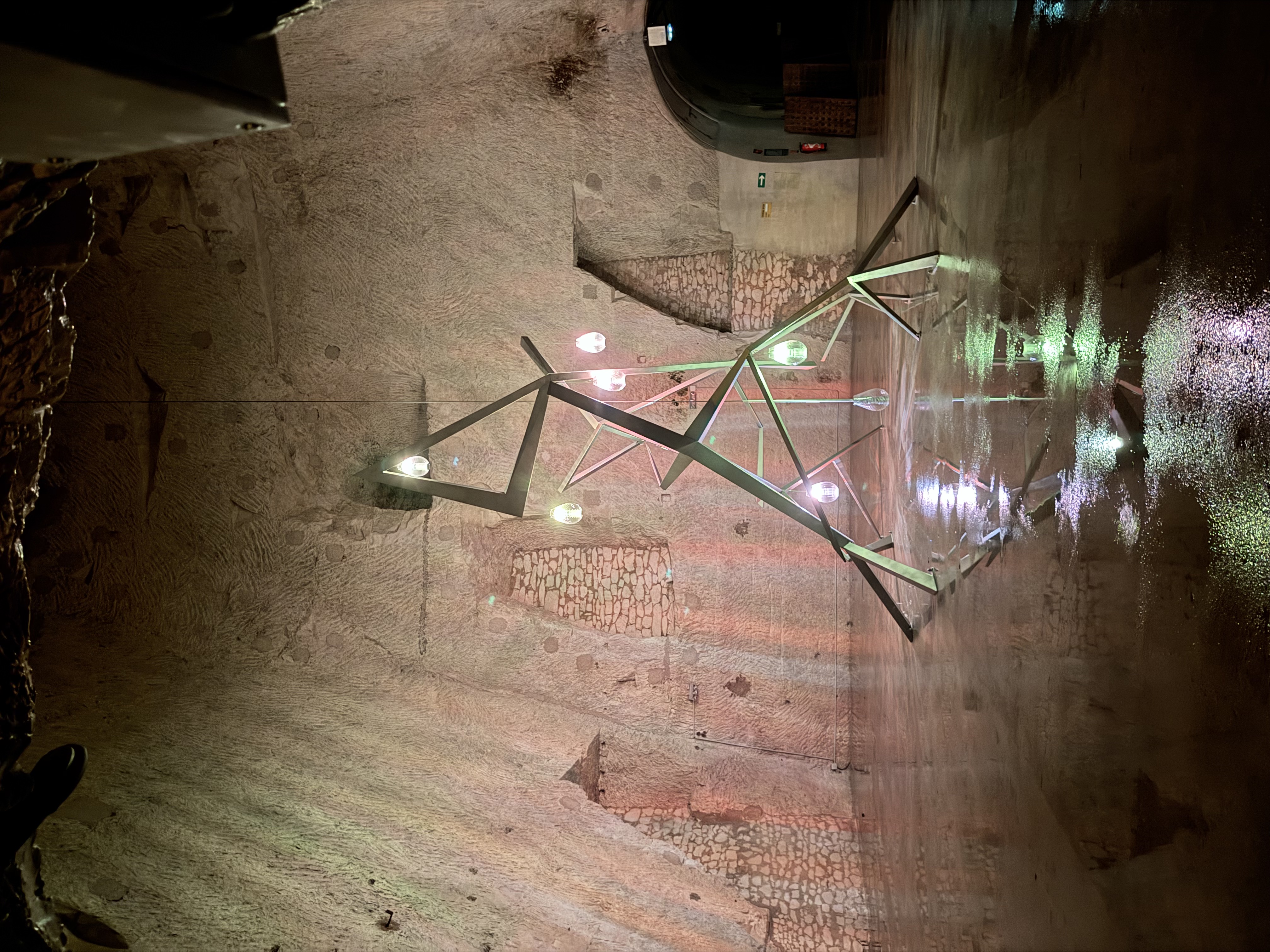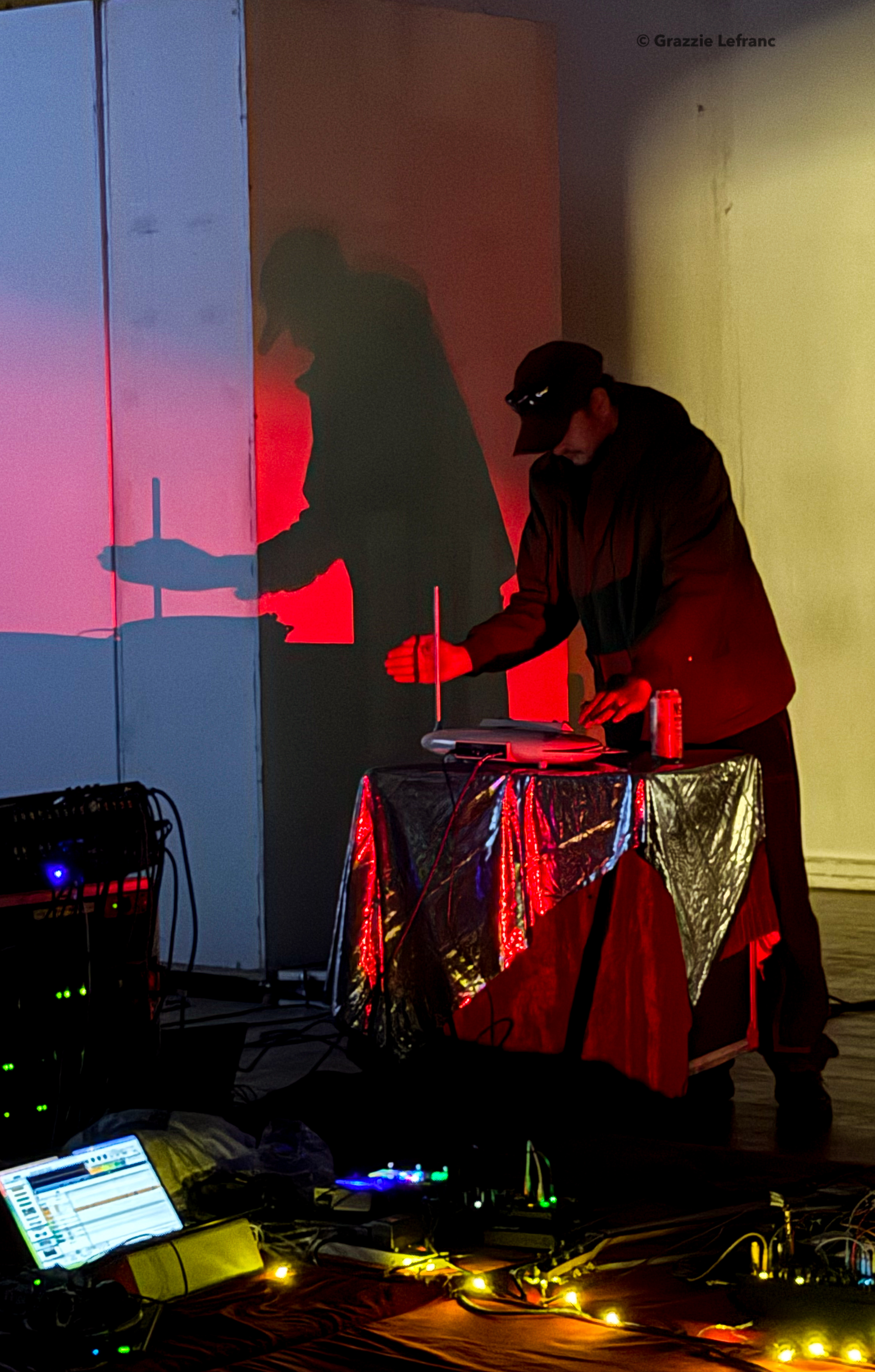
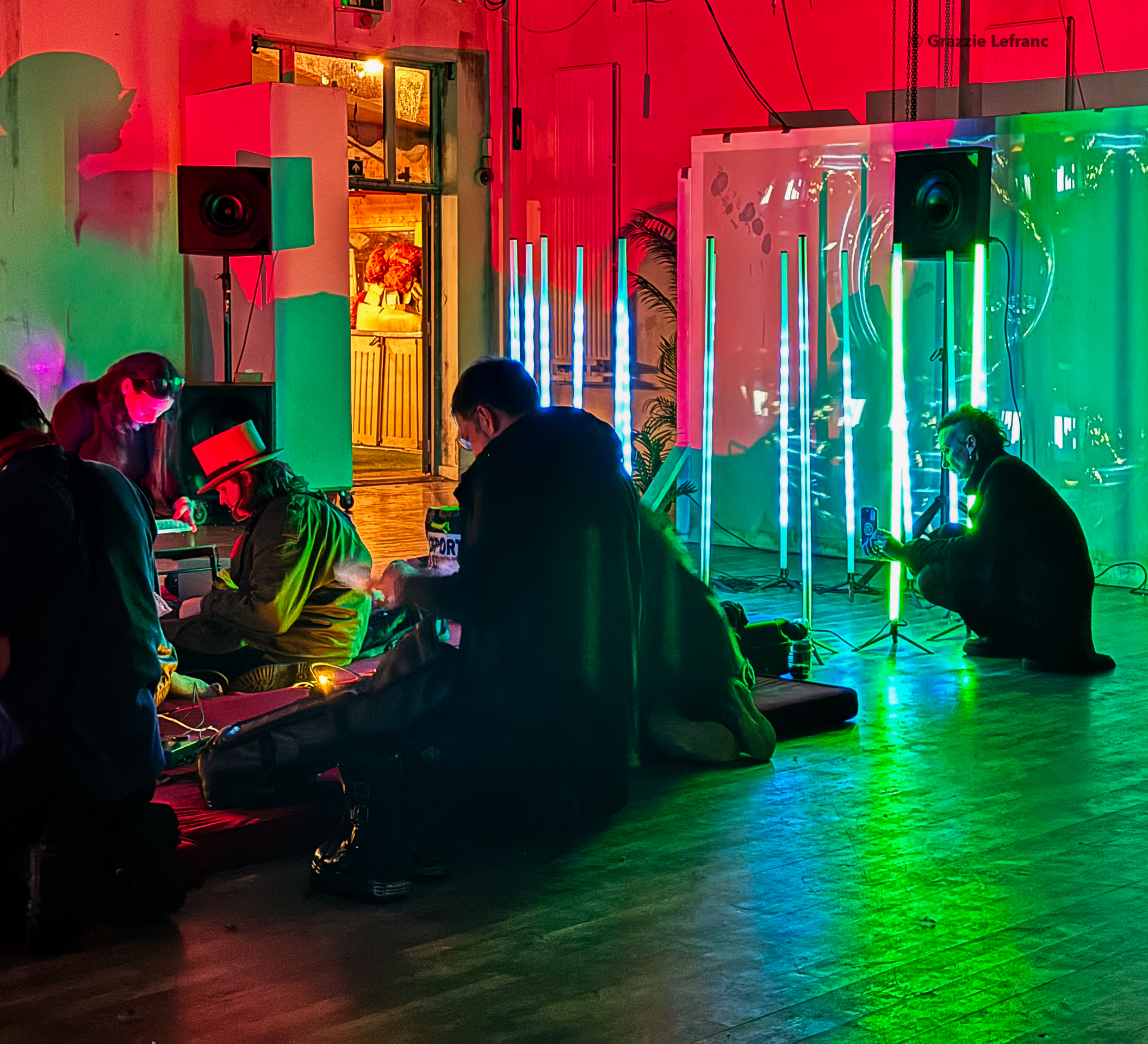
On a Sunday afternoon in East London, I stepped into a room where cables became veins, light became architecture, and sound reorganised the body.
Game Guidelines for Workshops was not just an experimental sound session. It was a live study in distributed authorship — a carefully orchestrated exploration of how immersive environments can decentralise perception, reorganise attention, and create shared cognitive space. I was invited to participate and document, moving between both roles throughout the afternoon.
People gathered on the floor — not as audience, but as field-builders. Modular systems, constraint-based play, feedback loops, red light, proximity. No spectacle. Just attention. And that is what interests me most.
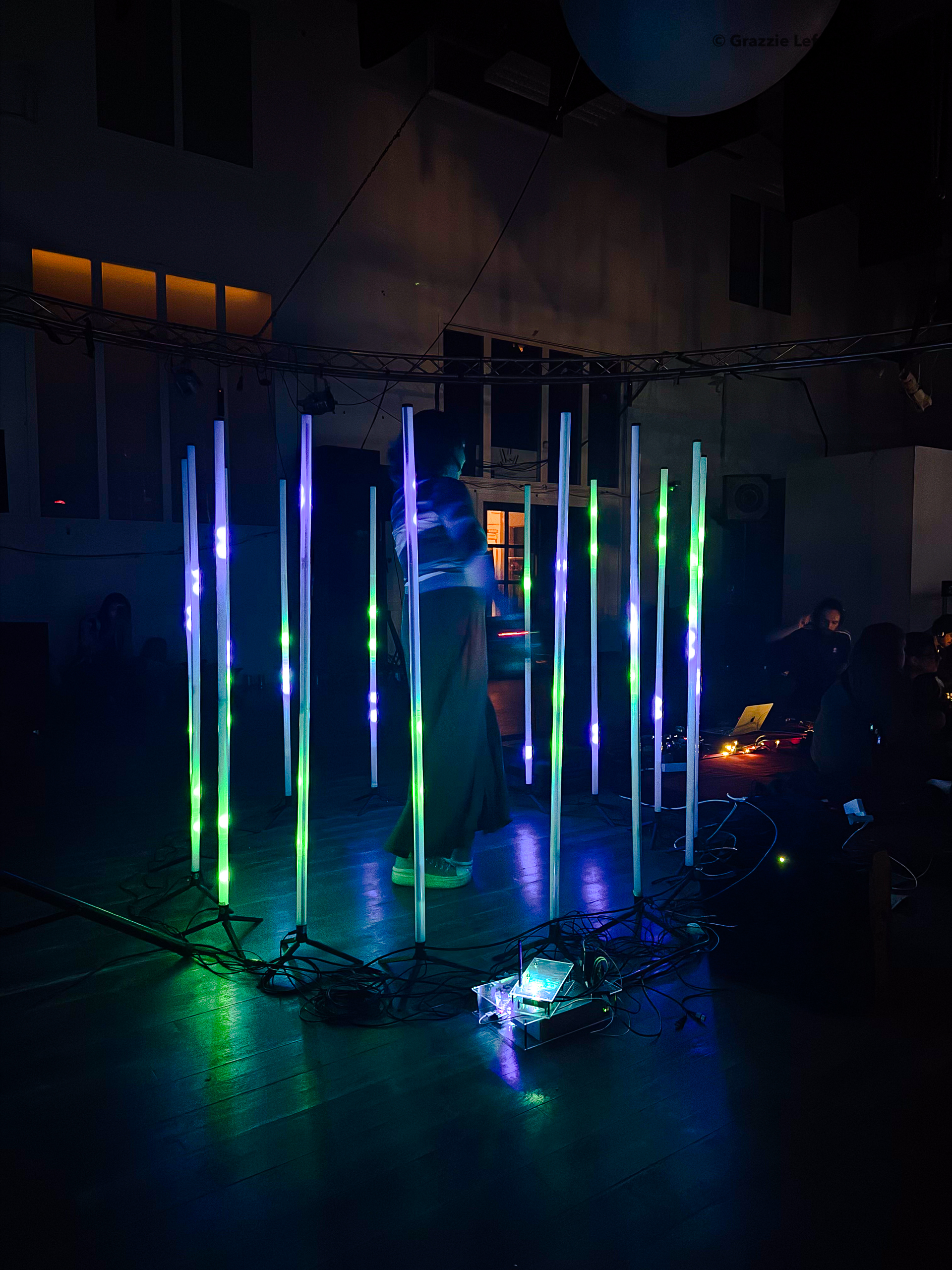
Ambisonics: spherical cognition
Ambisonic spatial sound is not simply surround sound. It encodes the world in three dimensions using spherical harmonics — preserving direction, elevation, and depth simultaneously. But beyond the mathematics, it does something more fundamental: it decentralises the listener.
Instead of a "sweet spot" (like stereo), ambisonics creates a zone of immersion. Every position in the space is valid. Movement matters. Orientation matters. Proximity changes what you hear. This has profound implications for how groups organise attention. In traditional performances, the audience faces the stage. In ambisonic spaces, there is no single focal point. Participants must navigate, choose, listen — become active agents rather than passive receivers.